

Watch the video
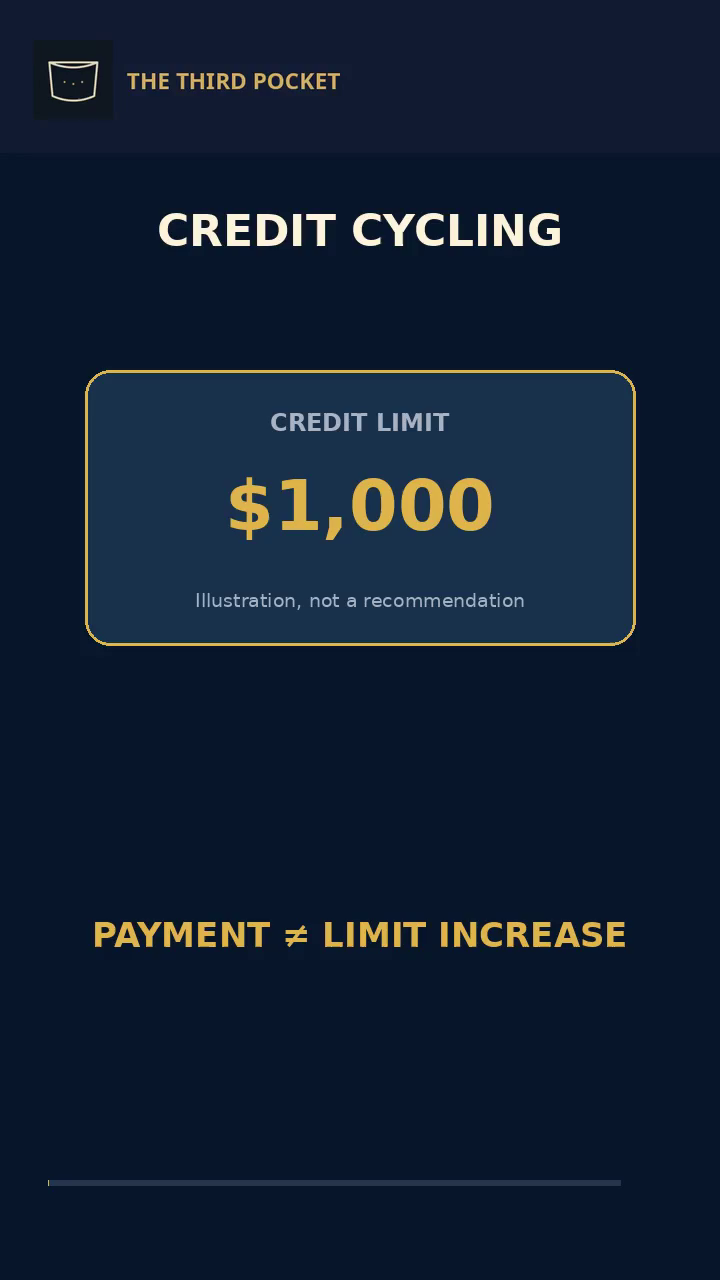
Paying down a credit card and reusing its available credit can push total charges above the approved limit within one billing cycle. The limit itself hasn't increased.
Total charges are not the same as the credit limit
In a made-up example, a card has a $1,000 limit. Charges, repayments and further charges within one billing cycle can add up to $2,000 of total purchases even though the approved limit remains $1,000. This is an illustration of the difference, not an account example or an instruction to cycle credit.
Early payments aren't automatically cycling
Making more than one payment during a billing cycle isn't necessarily credit cycling. Chase says multiple payments can help with budgeting. Paying early and repeatedly using restored credit to put total charges above the assigned limit are different things.
A payment may not restore available credit immediately
Capital One says a payment hold can last about 3-9 days while it confirms the payment from your bank account. That is an issuer-specific timeline, not a rule for every card or every payment. Your available credit may not update as soon as you make a payment.
The risk isn't an automatic outcome
Consumer-finance reporting warns that some issuers may close accounts over credit cycling. That is a reported risk, not a universal issuer prohibition or a claim that every instance leads to closure. There is no claimed safe cycling frequency here.
Check your issuer's rules rather than treating this as a loophole.
Educational information, not personal credit advice.
Explore further
Explore when a 0% balance transfer actually saves money. The related calculator compares staying at your current APR with moving the balance, fee included.